
Define the maintained lawn
Clear boundaries make treatment more efficient and help preserve natural areas that do not need to become turf.
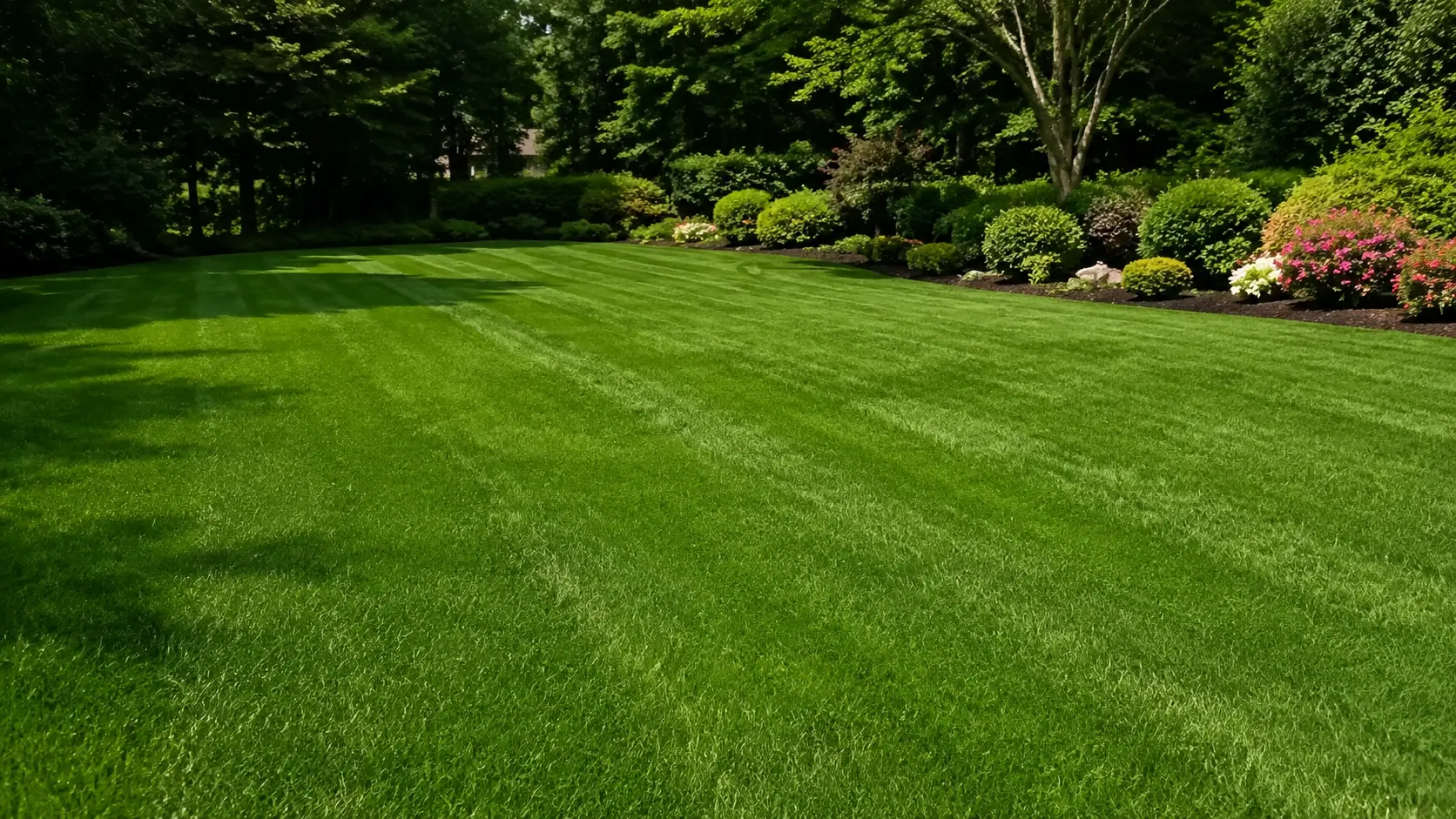
Customized lawn care for Ashford's rural and wooded homesites, with honest recommendations for turf, trees, shrubs, and seasonal recovery.
Get Your Free EstimateYes. Green Carpet Lawn Care provides residential lawn, tree, and shrub services in Ashford, Connecticut, from our nearby Somers office. Service is subject to route availability and a property-specific estimate.
Ashford properties are often wooded, irregular, and larger than a typical suburban lot. Sunlight may change dramatically across the yard, and natural areas may border the maintained lawn. We help homeowners focus treatment where healthy turf is useful and achievable rather than trying to force lawn into every corner.
Ashford's wooded sites may warm slowly in spring and accumulate heavy leaf cover in fall. Treatment and seeding schedules need enough flexibility to follow the property, not only the calendar.
Clear boundaries make treatment more efficient and help preserve natural areas that do not need to become turf.
Seed choice and expectations should reflect daily sun, seasonal leaf cover, and competition from nearby trees.
Wildlife activity, drought, grubs, and disease can overlap; inspection helps identify the most likely cause.
We do not assume every property needs every treatment. After evaluating turf density, weeds, insects, soil, light, moisture, and your goals, we can recommend a focused seasonal plan.
Green Carpet Lawn Care was established in 2001 and is owned by Joseph and Nancy Baj. Our local experience helps us recognize recurring north-central Connecticut turf patterns, but we still evaluate the individual property before recommending work.
Connecticut homeowners can independently verify core lawn-care principles through public resources. UConn Extension explains that soil testing can identify pH and nutrient imbalances before lime or fertilizer is added. The Connecticut Agricultural Experiment Station documents the life cycles and turf damage associated with white grubs. Connecticut DEEP publishes consumer guidance for organic and lower-impact lawn care.
We evaluate larger properties based on route availability, access, and the size of the maintained lawn. Natural woods and meadows do not need to be included simply because they are part of the parcel.
Moss often points to conditions such as shade, moisture, low turf density, compaction, or soil chemistry. Removing moss without addressing those conditions rarely produces a lasting result.
Yes, when inspection and timing support preventive or corrective treatment. Brown grass or animal digging alone is not enough to confirm damaging grub activity.
Tell us about your property and we’ll recommend a plan designed for Connecticut’s climate.