
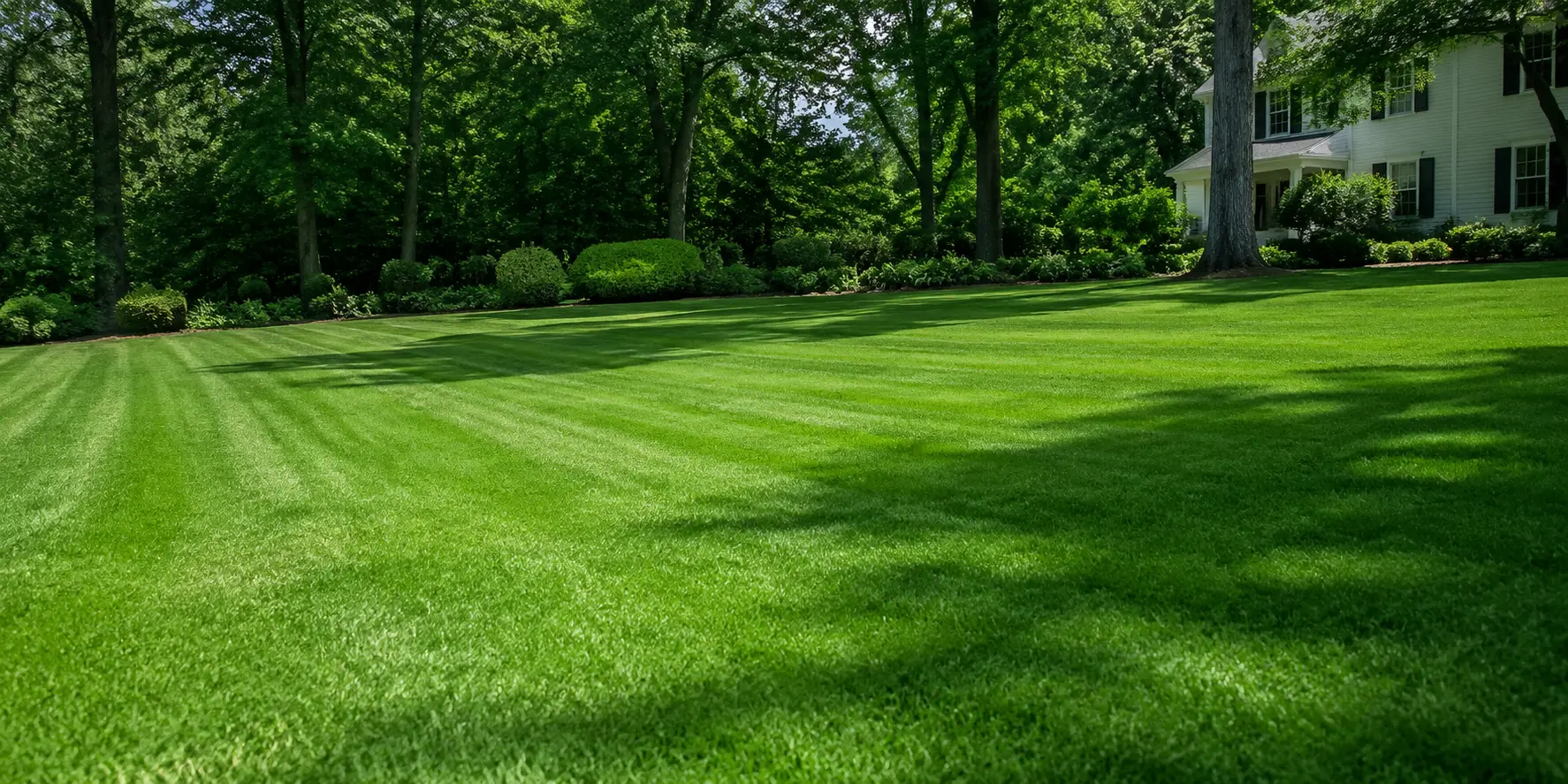
Every year, right around the first week of October, our phone in Somers starts ringing with the same question. The lawn looks rough after summer, the neighbor just had his aerated, and now the homeowner is wondering if they missed the boat.
The honest answer: maybe not, but the boat is pulling away from the dock.
We've been caring for lawns in Somers and across Tolland and Hartford Counties for more than 25 years. That's a lot of Octobers. Some years we've overseeded into the second week of the month and watched it fill in beautifully. Other years an early cold snap shut the door before the seed knew what hit it. So instead of a blanket yes or no, here's how we actually decide, and what we'd tell you if you called us today.
The short answer
Core aeration by itself is still worth doing in October. Grass roots keep growing in cool fall soil, and opening up compacted ground now pays off next spring.
Overseeding is a closer call. Early October can still work with fast-sprouting seed and good watering. By mid-to-late October, most seed won't have time to grow up before winter, and you're usually better off waiting and doing a dormant seeding in late November or early December instead.
If you want the full picture on timing, seed choice and soil prep, our earlier guide on when to seed and aerate a lawn in northern Connecticut covers the ideal window. This post is about what to do when you're already past it.
Why October seeding gets riskier every week
The UConn Home & Garden Education Center puts Connecticut's best seeding window at roughly August 15 to September 15. That's not an arbitrary date. It's about giving a brand-new grass plant enough warm days to sprout, root and toughen up before the ground gets cold.
Here's the math we run in our heads every fall.
First, the frost clock. At Bradley International, the weather station closest to our Somers office, the average first fall frost lands around October 10, based on NOAA's 1991–2020 climate data (Old Farmer's Almanac). That's an average, with roughly a 30 percent chance it comes earlier. Low spots, wooded lots and higher ground in towns like Stafford, Willington and Tolland often see frost before the river-valley neighborhoods in Windsor Locks or Enfield do.
Second, the sprouting clock. Different grasses take very different amounts of time just to come up:
| Grass type | Typical time to sprout in good conditions |
|---|---|
| Perennial ryegrass | 5 to 7 days (Penn State Extension) |
| Tall fescue | 7 to 21 days (Barenbrug) |
| Kentucky bluegrass | Up to 2 weeks or longer (Penn State Extension) |
And those numbers assume warm soil. As October soil cools, everything slows down.
Third, the growing-up clock. Sprouting is only the start. A seedling needs several more weeks to build roots and get mowed a couple of times before it can handle frost heave, snow load and a Connecticut February. The University of Minnesota's turf program puts it bluntly: seed that sprouts late in the season often doesn't survive the winter, because the young plants are too immature (UMN Turfgrass Science).
Put those three together and you can see the problem. Seed a Kentucky bluegrass blend on October 15 and it may not even be up until the end of the month, right as nights get hard. That's why we treat the first week or so of October as the realistic cutoff for most overseeding jobs in our area, and we lean on faster grasses when we do push it.
What still makes sense in October
Core aeration on its own
This is the one we're most comfortable doing all month. Core aeration pulls small plugs of soil out of the lawn, which opens channels for air, water and nutrients to reach the roots. Cool-season grass puts a lot of energy into roots in the fall, so loosening compacted soil now gives those roots somewhere to go.
Two caveats. UConn's guidance is that core aeration is generally only needed when soil is actually compacted, so we don't aerate a lawn just because it's on the calendar. And we won't run the machine on soaking-wet ground, because that can smear and pack the soil instead of loosening it. A quick test: push a long screwdriver into a healthy spot and then into the worn path by the swing set. If one goes in easy and the other fights you, that's compaction.
Overseeding in the first part of the month
If the lawn is thin rather than bare, and we can get seed down in roughly the first week to ten days of October, overseeding right after aeration can still work. A few things improve the odds:
- Faster grasses. Mixes heavier in perennial ryegrass or tall fescue get up and going sooner than straight Kentucky bluegrass.
- Steady moisture. Seed has to stay damp until it sprouts. October usually helps with cooler days and less evaporation, but a dry stretch can still stall it.
- Seed-to-soil contact. Seed sitting on top of thatch or leaves doesn't root. The aeration holes give it somewhere to land.
- Leaf control. This is the one people forget. A wet mat of maple leaves on top of new seedlings for a week will smother them.
If you can't commit to watering and keeping leaves off for the next few weeks, we'd honestly rather you wait.
Spot repairs
Small bare patches, like where the pool cover sat or the dog wore a path along the fence, can still be loosened, seeded and covered with a light layer of straw or seed mat in early October. Small areas are easier to keep moist, which is what usually makes or breaks a late job. Our lawn seeding page has more on how we handle repairs versus full overseeding.
Plan B: dormant seeding after Thanksgiving
If you've missed the window, there's a counterintuitive option that works better than seeding in late October: wait until it's properly cold.
Dormant seeding means spreading seed when the soil is cold enough that it won't sprout until spring, but before the ground freezes solid. The University of Minnesota's turf program recommends this approach for homeowners who missed the mid-August to mid-September window (UMN Turfgrass Science). The seed sits in the soil all winter, freeze-thaw cycles work it into the surface, and it germinates as soon as conditions allow, often weeks before you could get out there with a spreader in April.
In north-central Connecticut that usually means late November into early December, depending on the year. It isn't perfect. Some seed gets eaten by birds or washed off slopes, and you'll want to steer clear of spring crabgrass preventers on those areas, since many of them also stop grass seed from sprouting. But for a thin lawn in October, it's often a smarter bet than seeding now and hoping for a mild November.
One more thing on timing: aerating now and dormant seeding later pair well. Many of the openings from an October aeration are still there to catch seed in December.
Four questions to ask before you book anything
When a homeowner calls us this time of year, these are the questions we work through on the phone or during the free estimate.
- Is the lawn thin, or is it actually compacted? Thin turf needs seed. Hard, compacted soil needs aeration. Plenty of lawns need both, but some only need one.
- Why did it thin out in the first place? Heavy shade, grubs, drought, a sprinkler zone that never reached the corner. If the cause is still there, new seed will fail the same way. Grub damage in particular can look a lot like drought; our insect and grub control page explains the difference.
- Can you keep seed moist and leaves off for three to four weeks? If you're traveling, have no irrigation, or live under a stand of oaks, that changes our recommendation.
- What's the soil telling us? Connecticut soils tend to run acidic, and UConn recommends testing before adding lime or nutrients. If pH is off, seed and fertilizer won't perform the way they should. We often pair fall work with lime and an organic soil booster when the soil calls for it.
What to expect after a fall aeration and overseeding
The first couple of weeks after service is where most of the result is won or lost, and most of it is on the homeowner's side of the fence. Here's roughly how it plays out on an early-October job.
- Day 1: Your lawn will look like a flock of geese walked across it. Those little soil plugs are supposed to be there. Leave them; they break down on their own with rain and mowing and return soil and microbes to the surface.
- Days 1 to 14: Keep the top half inch of soil damp. That usually means light watering once or twice a day when it hasn't rained, not one long soak. You want moist, not puddled. Our guide on how to water a Connecticut lawn without wasting water covers how to check sprinkler coverage with a few cans.
- Days 7 to 21: Ryegrass shows up first as a green fuzz. Tall fescue and bluegrass follow. Don't stop watering the minute you see green; those roots are still tiny.
- Weeks 3 to 5: Taper to deeper, less frequent watering. Make the first mowing once the new grass reaches your normal mowing height, with a sharp blade and the ground firm enough not to rut.
- The whole time: Get leaves off gently and often, ideally with a blower on low rather than a hard rake. And keep foot traffic, dogs and riding mowers off the new areas as much as you reasonably can.
Don't judge the result in November. A late-seeded lawn often looks patchy going into winter, then fills in noticeably in April and May once the soil warms.
Not sure which way to go? Let us look at it
The right call depends on your lawn, not the date on the calendar. We'd rather tell you to wait for a dormant seeding than sell you an October overseeding that won't make it through February.
Green Carpet Lawn Care is based at 216 Field Road in Somers, and we handle core aeration, overseeding and seasonal fertilization for homes across our service area, including Somers, Enfield, Ellington, Stafford, Tolland, Vernon, East Windsor and Suffield.
Request a free estimate or call us at (860) 871-1025. Discounts are available for seniors, veterans and military, public service workers, medical personnel and emergency responders.
October Aeration & Overseeding FAQs
Is October too late to aerate a lawn in Connecticut?
No. As long as the grass is still growing and the soil isn't saturated or frozen, core aeration in October still relieves compaction and helps fall root growth. It's overseeding that gets riskier as the month goes on.
What's the latest I can overseed in Somers or Enfield?
For most lawns in north-central Connecticut, the first week to ten days of October is a practical cutoff, and only with faster-sprouting seed and consistent watering. After that, dormant seeding in late November or early December is usually the better bet.
What is dormant seeding?
It's spreading grass seed when the soil is too cold for it to sprout, but before the ground freezes. The seed overwinters in the soil and germinates in early spring. It's a recognized option for homeowners who missed the late-summer window.
Should I fertilize after aerating in October?
Fall is the most important feeding season for cool-season grass, but what and how much depends on your soil and whether you're seeding. Connecticut law allows phosphorus fertilizer when you're seeding or repairing a lawn but restricts it on established lawns. Our post on winterizer fertilizer in Connecticut goes into the late-season feeding in detail.
Do I need to pick up the soil plugs after aeration?
No. Leave them. They break down in a week or two with rain and mowing.
My lawn is under big oak trees. Will fall overseeding fix it?
Probably not on its own. Aeration and seed can't make up for a lack of sunlight. Shade-tolerant fine fescues help, but heavy shade sometimes calls for pruning or a different groundcover. We'll tell you honestly if seed is a waste of money in a particular spot.
Sources
We used the following resources to verify the timing, agronomic guidance and climate data in this article. Accessed October 1, 2026.
- Healthy Lawns, Sustainable Landscapes, and Other August News — UConn Home & Garden Education Center
- Soil Testing — UConn Home & Garden Education Center
- Frost Dates for Windsor Locks, CT — The Old Farmer's Almanac (NOAA 1991–2020 climate data)
- Turfgrass Species for Pennsylvania — Penn State Extension
- Frequently Asked Questions for Best Seeding Success — Barenbrug USA
- Consider Dormant Seeding Your Lawn This Fall — University of Minnesota Turfgrass Science
- Your Lawn and the Phosphorus Law — UConn Soil Nutrient Analysis Laboratory
Editorial note: This article provides general educational information for northern Connecticut home lawns. Weather, product labels, current state requirements and your property's conditions take priority. Diagnose a problem before treating it.